

Scent, Sound, Taste: Thought Leadership on Sensory Branding to Elevate Dubai Hotel F&B
Elevate guest experiences with sensory branding Dubai hotel F&B by integrating signature scent, curated soundscapes, and culinary storytelling.
Hotel Branding & Positioning
Signature Scents and Brand Identity: Sensory Branding for Dubai Hotel F&B

1. Sensorial Tech and Seamless Implementation: Bringing Signature Scents to Life in Dubai Hotel F&B
Implementing signature scents and sensory technology in Dubai hotels requires a coordinated, cross-disciplinary plan that blends aroma design, engineering and guest insight. Start by mapping guest journeys to pinpoint where scent, sound and lighting most influence perception. Use discreet scent-diffusion tied to HVAC zoning so olfactory profiles vary by space and time. Layer adaptive systems—sensor-driven lighting, playlists and projection mapping—that respond to occupancy and mood. AI can personalise fragrance presets and menu suggestions based on preferences, while staff training turns sensory intent into precise service gestures. Pilot activations to measure feedback, refine concentrations and test culinary pairings. Digital previews and VR can extend the sensory promise before arrival, priming expectations and boosting bookings. For practical frameworks, see Dubai hotels elevate F&B branding. When executed deliberately, sensorial tech anchors brand identity and intensifies emotional connections at every meal. External reference: https://woohoo.restaurant/blog/immersive-dining-experience-dubai-where-food-meets-entertainment/
2. Scent-Led Value: Measuring ROI and Market Edge for Dubai Hotel F&B
Sensory branding in Dubai’s luxury F&B operations translates directly into measurable financial gains. Signature scents, immersive dining and cohesive multi-sensory menus drive higher average checks, longer covers, and increased repeat visits by creating emotional bonds that justify premium pricing. Effective programs raise ancillary spend on bars and events and improve room-night conversion when F&B becomes a brand driver.
Measure impact with focused KPIs: repeat-visit rate, average spend per guest, dwell time, net promoter score, and conversion lift from campaigns. Run pilot zones and A/B tests to isolate scent and experiential variables. Account for costs—fragrance design, diffusion systems, staff training and sensory programming—and model payback across six to eighteen months.
Beyond metrics, sensory branding creates defensible market differentiation. In a crowded Dubai scene, a consistent olfactory identity and story-led cuisine enhance perceived value and fuel organic advocacy. For practical loyalty frameworks see hotel F&B loyalty. External research supports long-term impact: https://www.travelandtourworld.com/news/article/the-powerful-impact-of-sensory-branding-on-guest-experiences-in-modern-hospitality-and-how-it-drives-long-lasting-impressions/
3. Cultural Signals and Geopolitical Nuance: Crafting Inclusive Scent Strategies for Dubai's Luxury F&B
Dubai hospitality must blend sensory luxury with cultural intelligence to build credible brands. Signature scents need careful curation to avoid religious or social misreads. Seasonal scent shifts refresh perception while preserving a recognizable olfactory core. Staff training on scent narratives and intensity modulation ensures inclusive guest moments. Heritage-led aromas and locally sourced culinary notes can authenticate experiences without appropriation when co-created with cultural custodians. Cross-industry partnerships amplify storytelling but require ethical guardrails that respect local traditions. Spatial design, lighting and sound must align with scent to create consistent sensory flow. Measure impact through guest narratives, repeat visitation, and operational metrics to validate ROI. Leaders who embed cultural sensitivity into multisensory strategies reduce risk and deepen emotional loyalty. For practical frameworks that map guest touchpoints and sensory sequencing, see Dubai guest journeys. Further reading: 5 powerful scent marketing strategies.
Thought Leadership: How Sensory Branding Can Elevate Dubai Hotel F&B Experiences — Multi-Sensory Design: Taste, Sound, Sight, and Touch
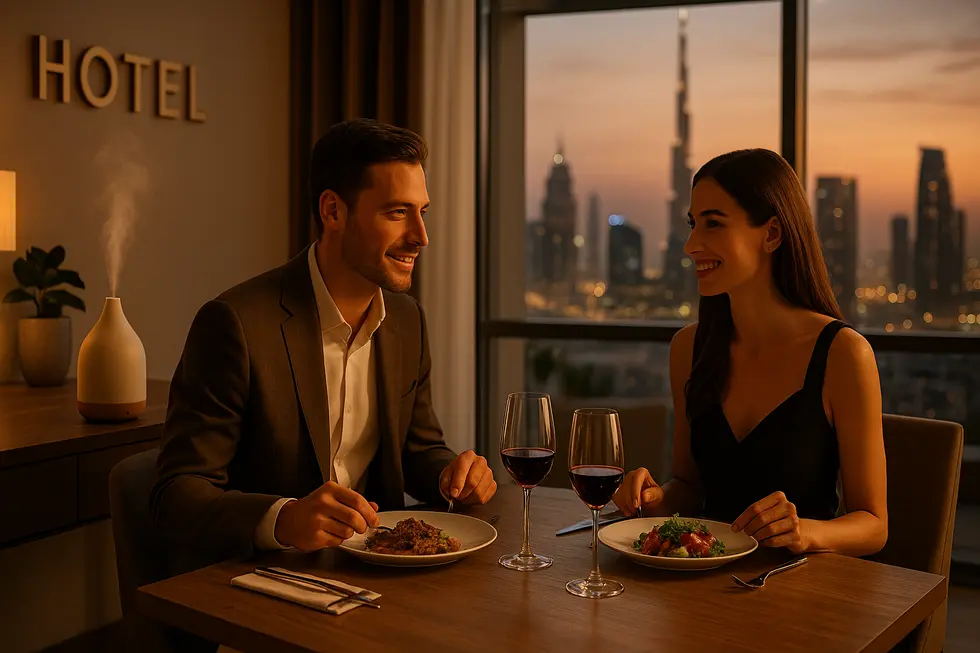
1. Taste-First Innovation: Tech-Driven Cuisine, Cultural Flavor and Measurable ROI in Dubai F&B
Culinary innovation is the axis where taste meets technology and culture to boost guest engagement and revenue. AI-driven recipe design helps chefs calibrate flavor, texture and portion with scientific precision, reducing waste and improving consistency. Dynamic, personalized menus respond to guest profiles, increasing spend and dwell time. When food aligns with ambient lighting, sound and tactile elements, dishes become narrative moments that guests remember. Local ingredients and culturally tuned pairings create authenticity and social connection, turning meals into identity-affirming experiences that drive loyalty. Signature plates, exclusive recipes and sensory-conscious packaging set hotels apart in Dubai's crowded market and protect margins. Experiential formats - guided tastings, chef-led workshops and curated pairing journeys - unlock ancillary revenue and social amplification. Together, these practices deliver measurable returns: higher average check, stronger repeat visitation and deeper brand equity. For operators, integrating culinary tech with cultural design is both a creative and financial imperative for hotel F&B loyalty. https://www.maison21g.com/articles/scent-marketing-boosting-guest-experience-in-dubais-and-the-middle-east-hospitality-industry
2. Sonic and Visual Craft: Acoustic Architecture, Lighting and Interactive Design for Culturally Fluent F&B
In Dubai’s luxury F&B scene, sound and sight shape how flavour is remembered. Thoughtful acoustic architecture reduces intrusive noise and sculpts brand tone with curated playlists and sound logos. Strategic reverberation control, absorptive paneling and spatial zoning protect conversation while highlighting live performances. Lighting design pairs color temperature, contrast and dynamic cues to guide pacing, reinforce meal stages and heighten dish presentation. Together, sonic and visual layers create emotional beats that make a meal feel cinematic. Digital interfaces—from table displays to projection mapping—extend visual storytelling, letting cultural motifs unfold without breaking ambience. When these elements reference local heritage respectfully, they deepen a sense of place for international guests. Material choices, sightlines and soundproofing must respect cultural norms around privacy and celebration. Integrated planning ensures acoustic, lighting and interactive systems act as a single narrative device, amplifying culinary identity and guest memory. For practical design insights see Dubai hotel and restaurant guest experience. External research: https://www.maison21g.com/articles/scent-marketing-boosting-guest-experience-in-dubais-and-the-middle-east-hospitality-industry
3. Tactile Service and Sustainable Operations: Embedding Touch into Dubai Hotel F&B
Touch completes sensory storytelling in hotel F&B, bridging design, service and sustainability. Tactile cues — tableware weight, fabric textures, plate temperatures and food mouthfeel — shape memory as much as flavour. Embedding these cues requires operational clarity: menu engineering, kitchen layout and supplier choice aligned to sensory objectives, with modular models for pop-ups or destination dining that scale experiences without diluting quality. Staff translate design into moments, so hiring for empathy and training in sensory literacy is essential. Practical training uses briefings, roleplay and sensory audits to calibrate consistency. Sensory KPIs tie guest feedback to staffing and procurement decisions. Sustainability must be integral, not an add-on: local seasonal sourcing, durable tableware, circular procurement and energy-efficient fixtures enrich touch while lowering impact. Partnerships with local artisans add authenticity and community benefit. Cross-department teams balance guest delight with staff wellbeing, operational efficiency and measurable ROI. For practical frameworks on operational design see operational design Dubai restaurant. Further reading: https://www.map-consultancy.com/en/blog/sensory-branding-hospitality-industry
Thought Leadership: How Sensory Branding Can Elevate Dubai Hotel F&B Experiences — Strategic Collaborations, Innovation, and Market Differentiation

1. Strategic Collaborations: Cross-Industry Partnerships That Amplify Sensory F&B Moments
Strategic collaborations turn sensory ideas into scalable guest experiences, enabling hotels to borrow cultural capital and technical expertise. By partnering with fashion houses, design studios, tech labs and culinary ateliers, properties fuse visual aesthetics, olfactory signatures and interactive technology into cohesive narratives that justify premium pricing. Cross-industry teams co-create limited-run environments, seasonal scent programs and immersive installations that generate social amplification and repeat visits. Technology partners supply adaptive lighting, AI-driven soundscapes and projection systems that personalize atmosphere in real time. Design collaborators refine materials and tableware to enhance tactile pleasure and visual storytelling. Culinary partners anchor authenticity through local ingredients and ritualised service. These alliances reduce time-to-market for novel concepts and spread development costs across stakeholders. For hoteliers, the result is distinctiveness that is hard to copy and easy to remember. This strategy increases guest lifetime value. Learn more about practical branding tactics in Dubai hotels: Dubai hotels elevate F&B branding.
https://economymiddleeast.com/news/emerging-trends-shape-future-of-fb-in-hospitality-in-dubai/
2. Tech-Driven Experience Design: Orchestrating Senses for Distinctive Dubai F&B
Dubai’s edge in hospitality lies in fusing technology with experience design to sculpt memorable multi-sensory journeys. By treating AI, AR, lighting, sound and scent as narrative instruments, designers compose coherent emotional arcs that begin at reservation and extend through departure. AI profiles fine-tune menus, service rhythms and ambient cues to match guest preferences without feeling intrusive. Augmented reality layers cultural narratives onto physical spaces, turning static decor into animated storytelling. Biometric and sensor-driven systems enable lighting, temperature and soundscapes to adapt in real time, heightening immersion. Tactile choices in tableware and seating anchor digital effects with physical comfort. Strategic partnerships with complementary luxury brands amplify visual language and broaden sensory palettes. These collaborations create authentic, shareable cultural moments. For operators, the priority is orchestration: aligning technology, craft and brand story so experiences resist duplication and command premium value. Explore hyper-personalisation in Dubai restaurants for practical guidance. See a case study: https://woohoo.restaurant/blog/immersive-dining-experience-dubai-where-food-meets-entertainment/
3. Market Differentiation, Economic Reach and Societal Effects of Sensory F&B in Dubai Hotels
Dubai’s hotels deploy sensory F&B to secure distinct market positions and deliver measurable value. By crafting multi-sensory dining that appeals to high-net-worth and experience-driven guests, properties boost spend per cover and length of stay. This supports revenue diversification and resilience. Strategic collaborations with luxury retail and technology partners amplify storytelling. They create exclusive price points and new demand; examples appear in case studies such as Dubai hotels elevate F&B branding. Beyond commercial gain, immersive culinary venues act as soft power. They draw international events and enable cultural diplomacy. Social impacts include enhanced well-being, creative employment, and community engagement through local sourcing and programming. Risks require attention: supply-chain sustainability, regulatory alignment, and authentic storytelling prevent reputational harm. Success demands blended KPIs—guest sentiment, repeat visitation, and economic metrics—plus iterative testing. Sensory strategies therefore drive differentiation, support economic diversification, and generate societal value when embedded responsibly. https://www.map-consultancy.com/en/blog/sensory-branding-hospitality-industry
Final thoughts
Sensory branding is no longer optional for Dubai hotels that want to compete on experience rather than price alone. For F&B leaders at 4-star properties, the path to differentiation combines a clear brand narrative, a signature scent deployed consistently, and a coordinated multi-sensory design that aligns taste with sight, sound, and touch. Start small with defined pilots, measure outcomes against commercial KPIs, and scale the experiences that deliver the strongest uplift in guest satisfaction and revenue. Strategic collaborations and conscious innovation shorten time to market and amplify reach. Ultimately, sensory branding turns transient meals into lasting memories and converts impressions into loyalty. Let’s turn your menu into your best salesperson – contact us today.
About us
Markus Mensch is a strategic marketing consultancy specializing in hospitality and F&B brands, with offices in Dubai and Germany. Since 2007, the company has supported over 1,000 businesses in increasing visibility, guest loyalty, and revenue – without relying on paid ads. With the proprietary OBC-Strategie®, Markus Mensch and his team provide structured, result-oriented solutions tailored to 4-star hotels and restaurants. The company combines marketing expertise, industry experience, and hands-on implementation to help clients achieve sustainable growth. Made in Germany – Built for Dubai

Markus Mensch
CEO
Transform Your Hospitality Business Today
Are you ready to boost your revenue and enhance guest loyalty? Let's get started!