

Redeeming Dining: Can Hyper-Personalisation Transform Restaurant Guest Experience in Dubai's 4-Star Hotels?
Hyper-personalisation redeems restaurant guest experience in Dubai by using AI-driven, culturally tuned service to boost loyalty and revenue.
Customer Loyalty & Guest Experience
Can Hyper-Personalisation Redeem Restaurant Guest Experience in Dubai’s 4-Star Hotels? — Technological Foundations and AI Applications
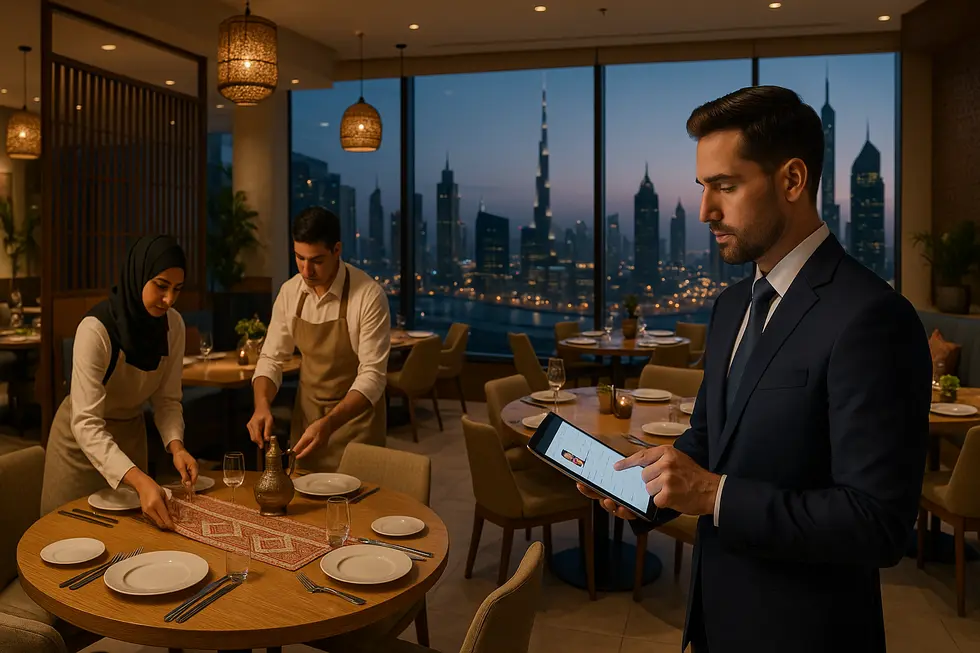
1. Building the Stack: AI Architectures That Enable Hyper-Personalised Dining in Dubai’s 4-Star Hotels
Technological foundations and architectures converge to make hyper-personalised dining possible in Dubai’s 4-star hotels. A unified data strategy brings reservations, loyalty records, point-of-sale, and sensor feeds into guest profiles. Machine learning and generative models convert that data into context-aware menu suggestions, mood-driven ambience adjustments, and timely staff prompts. IoT and in-room interfaces collect comfort cues while CRM systems distribute insights across service teams, preserving continuity from booking to dessert. Architecture must be modular and interoperable so hotels can pilot features, scale what works, and roll back risks quickly. Responsible deployment means encryption, transparent consent, bias testing, and continued human oversight so technology augments, not replaces, empathy. Staff training and iterative measurement close the loop between AI predictions and emotional outcomes, creating experiences that feel intuitive and culturally relevant. Learn more about designing a cohesive restaurant guest experience in Dubai's 4-star hotels Dubai hotels restaurant guest experience. For industry context see Arabian Travel Market: https://www.arabiantravelmarket.com/
2. From Cost Center to Competitive Edge: Economic, Operational and Business Model Impacts of Hyper-Personalisation
Implementing hyper-personalisation shifts restaurant economics from volume-driven margins to value-per-guest strategies. AI-driven menus and targeted offers raise average spend while reducing waste, creating measurable ROI with dynamic pricing and loyalty triggers. Operationally, unified data flattens friction: reservations, kitchen prep and service choreography align around guest profiles, cutting lead times and boosting table turns without sacrificing experience. Staff roles evolve from order takers to experience curators, needing focused training and new support tools. Business models must absorb upfront analytics investment and run iterative pilots to validate unit economics and scalability. Phased deployments and partner ecosystems help offset capital outlay. Successful hotels track five KPIs: revenue per available seat, repeat visit rate, food waste reduction, staff productivity and net promoter score. Pilots that tie these metrics to guest lifetime value justify expansion and inform pricing and loyalty choices. See operational design for Dubai restaurants. https://www.scirp.org/pdf/ajibm2025151_32123566.pdf
3. Ethics, Society and Geopolitics: Responsible AI for Hyper-Personalised Restaurant Experiences
Balancing trust and innovation is central when 4-star hotels adopt AI for hyper-personalised dining. Collecting behavioral, preference and contextual data demands clear consent, strong encryption, and attention to data residency to meet local and international rules. Equally important is preserving human warmth: AI should augment staff, not replace the cultural intelligence that makes service meaningful. Designers must audit models for bias so recommendations and pricing remain fair across nationalities, dietary needs and age groups. Sustainability gains from smarter inventory and energy management must be weighed against the carbon cost of compute. Geopolitical risks — vendor jurisdictions, cross-border data flows and regulatory divergence — require governance, vendor vetting and contingency plans. Practical steps include transparent opt-in policies, staff training that blends empathy with tech, iterative pilots and measurable KPIs tied to trust and loyalty. For tactical guidance on aligning operations, see the guest experience strategy in Dubai.
External source: https://www.dxbnewsnetwork.com/the-next-wave-of-hospitality-ai-and-personalized-experiences-in-dubais-luxury-hotels
Operationalising Hyper-Personalisation: Systems Architecture, Data Flows and Technology Integration for Dubai 4-Star Restaurant Experience

1. Architecting Guest-Centric Data Flows: Central Profiles, AI Recommendations and Human-Led Tech
A unified systems architecture is the backbone of hyper-personalisation in Dubai’s 4-star hotel restaurants. Centralized guest profiles must merge reservation data, dining history, dietary needs, and real-time signals into a secure hub. AI-driven recommendation engines then translate those signals into menu suggestions, seating choices, and timing alerts that anticipate guest needs. Multilingual interfaces and cultural rules ensure relevance across diverse guests, while privacy frameworks maintain explicit consent and compliance.
Technology should augment staff, not replace them: digital ordering, smart table settings, and chat assistants free teams to deliver warm, culturally aware service. Operational gains include reduced waste, faster service, and higher check values through dynamic upselling. Pilot iterative deployments, measure guest emotional response, and integrate sustainability preferences. For practical operational design guidance see the piece on operational design for Dubai restaurants: https://www.markus-mensch.ae/blog/operational-design-dubai-restaurant. External reference: https://www.mckinsey.com/business-functions/growth-marketing-and-sales/our-insights/how-companies-can-win-with-personalization
2. Workforce Reskilling, Incentives and Cultural Competence for Hyper-Personalised Restaurant Service
Frontline teams convert data into emotional moments; training must close that gap. Reskilling blends emotional intelligence with operational fluency, teaching staff to read guest signals and translate them into tailored offers. Staff learn to interpret CRM insights, manage AI recommendations, and preserve a human touch. Cultural competence is central in Dubai’s multicultural market, so roleplay and microlearning should cover dietary norms, greeting styles, and subtle etiquette. Incentives align behaviour: empowerment, decision-making autonomy, and recognition drive proactive service. Practical pilots test new routines and metrics, tracking repeat visits, satisfaction scores, and spend uplift. Managers must coach for judgment, not scripted fixes. Training that pairs technology practice with empathy builds anticipatory service that feels natural. For implementation guidance, see our primer on guest experience strategy in Dubai: guest experience strategy in Dubai. External detailed guide: https://www.profilenow.net/blog-posts-en/empowering-hotel-staff-for-hyper-personalization-a-beginners-guide
3. Designing the Guest Journey: Mapping Moments, Data Compliance and Local Impact
Service design in Dubai’s 4-star hotel restaurants starts with guest journey mapping that traces interactions from booking to checkout. Mapping emotional highs and friction allows AI-driven triggers to surface personalised menus, culturally tuned greetings, and in-room settings. This demands unified data, explicit consent protocols, and staff workflows that turn insights into human service. Compliance must protect privacy, respect dietary laws, and ensure transparent opt-ins while operational checks avoid algorithmic bias. Hyper-personalisation can also generate socioeconomic value: sourcing local producers, showcasing authentic cultural moments, and embedding ESG signals into recommendations. Practical staff training teaches teams to read AI prompts and deliver culturally sensitive encounters. When journey maps combine compliance with community impact, restaurants shift from reactive service to anticipatory hospitality that builds loyalty and supports Dubai’s social goals. For strategy guidance see guest experience strategy Dubai. External reference: https://www.inplass.com/what-is-hyper-personalization-of-hospitality/
Can Hyper-Personalisation Redeem Restaurant Guest Experience in Dubai’s 4-Star Hotels? — Cultural, Emotional, and Market Impacts
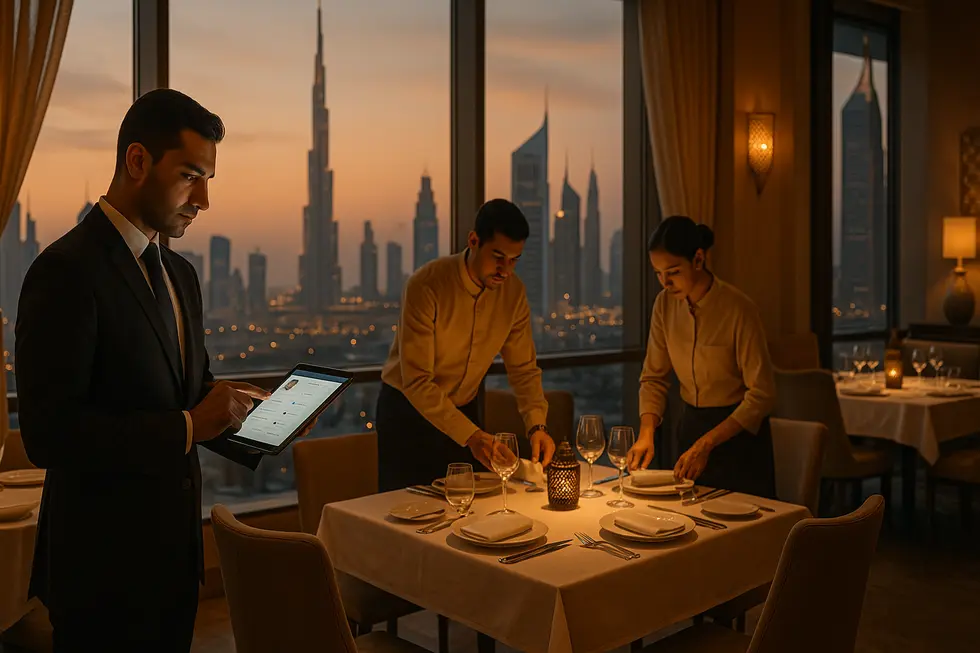
1. Engineering Empathy: Data Systems and Operational Design That Enable Hyper-Personalised Dining
Engineering empathy in Dubai's 4-star restaurants depends on convergent systems: unified guest profiles, lightweight AI inference, and staff workflows that translate data into feeling. A resilient data architecture ingests reservations, dietary flags, past orders and real-time signals, then surfaces concise prompts to hosts and servers. Security and privacy safeguards preserve trust while enabling quick personalization moments. Operational design trains teams to read AI cues as conversation starters, not scripts. This preserves the human warmth that turns tailored offers into emotional connections. Cultural layers are embedded as menu rules and multilingual touchpoints to respect beliefs and tastes. Pilots must measure repeat bookings, satisfaction and operational friction, iterating until technology amplifies service rather than dictating it. For pragmatic operational frameworks, see operational design for Dubai restaurants.
https://discover.hotelbeds.com/resources/insight/hyper-personalisation-ai-hotels
2. Profit, Positioning and Cultural Payoff: ROI of Hyper-Personalised Dining in Dubai’s 4-Star Hotels
Hyper-personalisation pays when cultural accuracy meets clear economics. Dubai’s 4-star restaurants can turn tailored moments into higher average checks and more repeat stays by linking guest profiles to offers. Tiered loyalty incentives and profile-driven menus lift lifetime value while reducing churn (Dubai hotels restaurant guest experience). Implementation requires investment in integration, content updates, and staff training. Scenario modelling and A/B testing isolate high-yield elements. Automation reduces routine tasks and frees staff to deliver emotionally rich service that drives advocacy. Cultural fidelity—language, dietary rules, sensory design—builds trust across diverse markets. Privacy-first data practices protect reputation and sustain long-term positioning. Measured KPIs such as NPS, revisit rate, and spend per visit reveal payback windows over multi-year horizons. When hyper-personalisation aligns with operational efficiency and sustainability claims, it becomes a defensible differentiator and a reliable revenue stream.
External source: https://www.dxbnewsnetwork.com/the-next-wave-of-hospitality-ai-and-personalized-experiences-in-dubais-luxury-hotels
3. Navigating Culture, Emotion and Geopolitics: Human-Centred Hyper-Personalisation for Dubai’s 4-Star Restaurant Guests
Hyper-personalisation in Dubai’s 4-star hotel restaurants must reconcile cultural nuance, emotional resonance and external dynamics to be credible and scalable. By combining AI-driven preference signals with frontline cultural intelligence, teams can deliver anticipatory service that respects dietary laws, multilingual needs and family priorities while avoiding tokenism. Menu customisation, ritual-aware moments, and locally attuned design translate data into warmth rather than automation. Societal tastes for curated yet familiar luxury push hotels to craft offers that feel personal and socially legible. Geopolitical travel patterns require segmentation that adapts experiences for transient business travellers, regional guests and long-stay visitors without fragmenting brand voice. Success rests on staff empowerment, transparent data governance and pilots that test emotional impact. Measured outcomes should track loyalty signals and emotional metrics, not just spend. This balances culture, emotion and market pressures. For operational guidance and strategic framing see Guest Experience Strategy Dubai. External industry context: https://hub.wtm.com/press/atm-press-releases/atm-2025-hotel-executives-highlight-hyper-personalisation/
Final thoughts
Hyper-personalisation can redeem and elevate restaurant guest experience in Dubai's 4-star hotels when technology, operations, and cultural intelligence work together. Start by consolidating guest data and proving a single use case with clear KPIs. Train staff to translate AI guidance into empathetic service and protect human judgement for culturally sensitive moments. Measured pilots, simple micro-SOPs, and privacy-first consent will deliver operational gains and stronger loyalty without over-investing. For Dubai properties competing for diverse guest segments and repeat visits, the prize is clear: a restaurant experience that feels intuitively personal, culturally respectful, and economically beneficial. Let’s design a guest journey they’ll never forget – start the conversation now.
About us
Markus Mensch is a strategic marketing consultancy specializing in hospitality and F&B brands, with offices in Dubai and Germany. Since 2007, the company has supported over 1,000 businesses in increasing visibility, guest loyalty, and revenue – without relying on paid ads. With the proprietary OBC-Strategie® Markus Mensch and his team provide structured, result-oriented solutions tailored to 4-star hotels and restaurants. The company combines marketing expertise, industry experience, and hands-on implementation to help clients achieve sustainable growth. Made in Germany – Built for Dubai

Markus Mensch
CEO
Transform Your Hospitality Business Today
Are you ready to boost your revenue and enhance guest loyalty? Let's get started!