

Rethinking Guest Experience Strategy: A Strategic Blueprint for Dubai’s 4-Star Hotel Restaurants
Rethinking Guest Experience Strategy for Dubai's 4-star hotel restaurants by integrating cultural authenticity, tech personalization, and supplier resilience.
Customer Loyalty & Guest Experience
Rethinking Guest Experience Strategy: Cultural-First Technology for Dubai’s 4-Star Hotel Restaurants

1. Digital Guest Journeys: Weaving Aadab into Seamless Tech-Enabled Dining
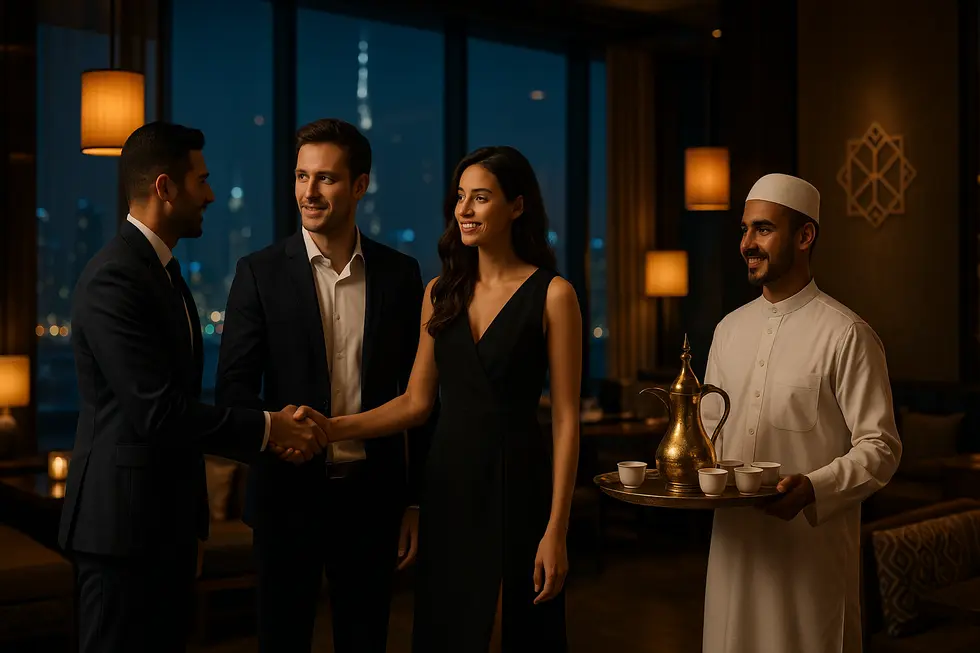
Bridging Aadab and algorithms creates a guest journey that feels both intimate and effortless. By anchoring F&B concepts in cultural storytelling, restaurants craft signature moments like Arabic coffee welcomes and majlis-style seating that set emotional expectations. Technology should amplify, not replace, these rituals: CRM-linked preferences, AI recommendations, multilingual digital menus, and contactless ordering make interactions frictionless while preserving discretion. Accessibility features and tactile signage extend inclusion. Staff training in cultural fluency and ethical data use ensures warmth alongside compliance. Pilot measurable touchpoints, then scale successful patterns. Transparently embedding ESG choices into menus and procurement builds trust. When data informs but hospitality leads, dining becomes a reason guests return. For practical design principles, see the guide on Dubai hotels restaurant guest experience. External reference: https://www.markus-mensch.ae/blog/dubai-hotels-restaurant-guest-experience-8afbd
2. Balancing Cultural Warmth and Commercial Sense: Pricing, ROI and Economic Design
Balancing cultural warmth with commercial sense is central to a viable guest experience strategy for Dubai’s 4-star hotel restaurants. Ground service rituals in Aadab and regional storytelling while mapping each signature moment to revenue streams. Train staff to read cultural cues and offer segmented, value-led upsells that reinforce authenticity. Measure impact with KPIs: net promoter score, repeat-booking rate, average spend, and length of stay. Implement tiered pricing tied to loyalty and curated experiences, and benchmark rates against Dubai competitors to protect market positioning. Convert qualitative feedback into quantitative insight through continuous pilots and smart analytics. Ensure accessibility, supplier reliability, and scalable personalization so cultural design yields measurable lifetime value. Learn more about guest experience strategy in Dubai. Further reading: https://www.brandteliers.com/post/curating-guest-experience
Operational pilots with finance validate assumptions and refine ROI rapidly.
3. Resilience in Practice: Geopolitics, Regulation and Supply Chains for Dubai 4‑Star F&B
Resilience in practice means linking cultural integrity with operational robustness so guest-facing promises survive shocks. Dubai operators must weave halal and Ramadan protocols, alcohol licensing and multilingual transparency into procurement and contingency planning. Create a cross-functional governance cell to map supplier risk tiers, codify substitution recipes, and set cold-chain SLAs with IoT monitoring. Forecasts must factor source-market shifts and route disruptions; safety stock policies should separate perishable from long‑life buffers. Contracts require OTIF KPIs, force‑majeure playbooks and alternate freight clauses. Visible guest measures—clear halal labeling, QR sourcing pages and pre-arrival notices—reduce disappointment when menus change. Regular scenario drills, supplier audits and a public assurance program protect brand trust while aligning experience, compliance and continuity. For design guidance, see designing restaurant guest experiences in Dubai hotels.
Further supplier guidance: https://www.hotelity.net/top-5-challenges-dubai-hotels-face-when-partnering-with-restaurant-suppliers/
4. Authenticity and Community: Societal Integration for Dubai’s 4-Star Restaurant Guests
Authenticity in design, cuisine and community is the seam that binds memorable guest journeys in Dubai’s 4-star hotel restaurants. By reading society’s rituals and embedding Arabic patterns, local art and regionally sourced flavors into interiors and menus, hotels create a tangible sense of place while respecting diverse sensibilities. Active community engagement—commissioning local chefs, hosting artisan pop-ups and programming traditional performances—deepens cultural immersion and supports local economies. Pairing these elements with quiet technology, flexible seating and sustainable materials preserves warmth and operational agility. Culinary storytelling should move beyond nostalgia: mix provenance, contemporary technique and clear narration on menus to translate heritage into emotional moments. For a practical framework on aligning cultural moments with personalization and operations, see architecting guest experience. External case studies of cultural storytelling in hospitality illustrate successful implementation: https://www.brandteliers.com/post/curating-guest-experience
Rethinking Guest Experience Strategy: A Strategic Blueprint for Dubai’s 4-Star Hotel Restaurants — Architecting Restaurant Guest Experience and Technology

1. Designing the Digital Spine: Technology and Cultural Moments for Memorable Restaurant Stays
Designing the Digital Spine — Dubai’s 4-star hotel restaurants must weave technology into cultural rituals so every touchpoint feels intentional. Start with tailored pre-arrival communications that capture dietary, prayer and celebration needs. Inside the restaurant, AI-driven recommendations, mobile ordering and dynamic ambience control streamline choices while preserving surprise. Behind the scenes, a unified guest profile links reservations, F&B preferences and feedback to empower staff for authentic, context-aware interactions. Pilot integrations in controlled environments to measure impact and train teams to translate data into empathetic service. Prioritize privacy and opt-in transparency to build trust across diverse guest segments. Scale what creates emotional connection, not just efficiency, so technology amplifies rather than replaces hospitality. See more on operational design at dubai-hotels-restaurant-guest-experience.
https://www.brandteliers.com/post/curating-guest-experience
2. Aligning Economics with Experience: Commercial Models, ROI and KPIs for Dubai 4-Star Restaurants
Aligning investment with measurable returns is essential when upgrading restaurant experiences. Capital goes to tech platforms and design; operating expense funds training and fresh ingredients. Model scenarios for ROI by linking incremental F&B spend, average check uplift, and repeat-guest rate to RevPAR gains. Track adoption of digital ordering and personalization to show efficiency improvements and cost-to-serve reduction. Core KPIs include CSAT, NPS, retention rate, average check, table turns, and digital adoption rate. Add sustainability measures such as waste reduction and supplier reliability to reflect brand value. Run short pilots, A/B test service variations, and map outcomes to revenue and loyalty forecasts. For practical frameworks on guest experience strategy in Dubai see guest experience strategy in Dubai. External context on supplier challenges is available here: https://www.hotelity.net/top-5-challenges-dubai-hotels-face-when-partnering-with-restaurant-suppliers/
3. Regulatory Currents and Competitive Signals: Navigating Geopolitics, Compliance and Supplier Resilience
Dubai’s 4-star hotel restaurants must read geopolitical shifts and regulatory signals as core strategic constraints. From source-market shifts to alcohol licensing and halal certification, compliance shapes menus, staffing and supplier contracts. Build resilient supply chains with vetted partners who guarantee quality, traceability and regulatory alignment. Use integrated CRM and AI to translate geopolitical changes into demand forecasts and menu agility. Enforce strict data governance and explicit consent to preserve guest trust. Train teams in cultural fluency and regulatory literacy so service remains authentic and lawful. Competitive advantage comes from combining consistent culinary standards with cultural storytelling and tech-enabled personalization. Measure supply reliability, operational uptime and guest satisfaction with KPIs tied to resilience. This approach aligns with broader guest experience strategy in Dubai: https://www.markus-mensch.ae/blog/guest-experience-strategy-dubai
More on curating cultural storytelling: https://www.brandteliers.com/post/curating-guest-experience
4. Societal, Cultural and Service Design: Crafting Inclusive, Authentic, Tech-Enabled Restaurant Journeys
To reframe guest experience in Dubai's 4-star hotel restaurants, designers must fuse societal inclusivity, cultural storytelling, empathetic service and subtle technology into one coherent journey. Accessibility audits, tactile signage, quiet zones and WCAG-compliant digital menus widen reach and show respect. Capture language and dietary preferences at booking so staff deliver localized, not literal, translations. Weave Aadab into rituals: Arabic coffee welcomes, majlis seating, regional tastings and discreet craft moments that balance spectacle with intimacy. Deploy AI and contactless tools to personalize without replacing warmth, and partner with steady suppliers to ensure consistent quality. This integrated approach turns operational agility and sustainability into memorable guest moments and repeat loyalty. Learn more about designing restaurant guest experiences in Dubai hotels. Further reading: Curating guest experience through brand-driven design and cultural storytelling.
Digital Threads: Technology, Suppliers and Trends Shaping Dubai’s 4-Star Restaurant Guest Journeys
1. Seamless Digital Guest Journeys: AI, Accessibility and Supplier Integration for Dubai 4-Star Hotel Restaurants
Seamless digital guest journeys unify technology, suppliers, and human service to elevate dining in Dubai’s 4-star hotels. AI-powered recommendations and contactless ordering speed service while preserving signature moments. Accessible, multilingual interfaces, screen-reader labels, and voice options ensure inclusivity for diverse guests. Suppliers must sync inventory through APIs, deliver consistent quality, and offer sustainable tableware to meet brand promises. Operational pilots, staff training, and clear KPIs — order accuracy, turnaround time, and repeat bookings — validate tech rollouts. Protecting guest data and integrating unified profiles keep personalization trusted and effective. Start small, measure outcomes, iterate, and scale. For practical design approaches, see the guide on designing restaurant guest experiences.
External reference: https://www.emerald.com/insight/content/doi/10.1108/whatt-05-2022-0054/full/html?skipTracking=true
2. Dynamic Pricing, Supplier Partnerships and Lean Operations for Guest-Centric Value
Sustainable profitability in Dubai's 4-star hotel restaurants depends on aligning economic models with guest value and operational realities. Adopt blended revenue streams: dayparts and tasting menus that justify premium pricing while protecting volume. Use dynamic pricing by segment and occasion, supported by predictive demand and loyalty data. Negotiate supplier contracts focused on consistent quality, flexible delivery and cost predictability to reduce waste. Optimize menus through engineering and portion control, and deploy labor scheduling tools to match demand. Pilots with KPIs validate changes. Invest in staff skills to convert cultural authenticity into perceivable value and higher spend. Operational efficiency and deliberate pricing create space for cultural storytelling and tech-enabled personalization without eroding margins. For practical design ideas, see Dubai hotels restaurant guest experience. External analysis of supplier risks is here: https://www.hotelity.net/top-5-challenges-dubai-hotels-face-when-partnering-with-restaurant-suppliers/.
3. From Sourcing to Service: Procurement Resilience and Supplier Partnership Strategies for 4-Star Hotel Restaurants
Procurement resilience is the backbone of memorable dining. Dubai hotels depend on suppliers for fresh, consistent ingredients and flawless timing. Complex import routes and seasonal tourism spikes demand flexible contracts, buffer stock, and local sourcing options that preserve quality without inflating cost. Regular supplier scorecards and shared forecasts reduce ambiguity and support agile scaling during festivals and high occupancy. Digital ordering, real-time tracking, and integrated inventory systems cut waste and prevent last-minute menu changes. Sustainability requirements add another procurement layer, so packaging and sourcing must align with guest expectations and regulations. Strong supplier partnerships, joint contingency plans, and periodic piloting of alternative sources keep service reliable. For operational alignment, reference practical frameworks like the operational design Dubai restaurant guide: https://www.markus-mensch.ae/blog/operational-design-dubai-restaurant
https://www.hotelity.net/top-5-challenges-dubai-hotels-face-when-partnering-with-restaurant-suppliers/
4. Geopolitical Currents and Supplier Strategy: Navigating Regulations and Societal Signals in Dubai’s 4-Star Hotel Restaurants
Balancing suppliers, trends and compliance under shifting regional dynamics
Dubai’s 4-star hotel restaurants must align supplier selection with geopolitical signals and local norms. Suppliers should deliver culturally appropriate, high-quality ingredients that meet dietary laws and sustainability targets. Operational teams must reduce waste, train multilingual staff, and embed AI-driven personalization while safeguarding guest data under strict privacy rules. Experiential dining and ESG transparency attract discerning guests, yet regional travel patterns and regulations demand flexible loyalty offers and content. Listening to societal trends among expatriates and residents helps shape menus and service rituals that feel authentic. A resilient strategy blends supplier partnerships, measurable pilots, and rigorous compliance to turn regulatory and societal complexity into a competitive advantage. For guidance on designing restaurant guest experiences, see this resource: designing restaurant guest experiences in Dubai hotels.
External reference: https://www.markus-mensch.ae/blog/guest-experience-strategy-dubai
Final thoughts
Rethinking guest experience strategy for Dubai's 4-star hotel restaurants is both a cultural and operational challenge that pays dividends when approached systematically. Embed local hospitality rituals into signature moments, unify guest data to power personalized service, and treat suppliers as strategic partners to secure consistent culinary quality. Start with focused pilots: define measurable KPIs, train frontline champions, and iterate quickly on what works. The final measure of success is not only higher covers and spend, but repeat visits, positive word-of-mouth, and a distinct dining identity that positions a 4-star property as both accessible and unmistakably Dubai in character. Let’s design a guest journey they’ll never forget – start the conversation now.
About us
Markus Mensch is a strategic marketing consultancy specializing in hospitality and F&B brands, with offices in Dubai and Germany. Since 2007, the company has supported over 1,000 businesses in increasing visibility, guest loyalty, and revenue – without relying on paid ads. With the proprietary OBC-Strategie®, Markus Mensch and his team provide structured, result-oriented solutions tailored to 4-star hotels and restaurants. The company combines marketing expertise, industry experience, and hands-on implementation to help clients achieve sustainable growth. Made in Germany – Built for Dubai

Markus Mensch
CEO
Transform Your Hospitality Business Today
Are you ready to boost your revenue and enhance guest loyalty? Let's get started!